
India is witnessing a rapid development in green building which requires energy conservation and quality built/exterior environment in its design. Poor design of buildings and systems not only wastes resources and energy and causes adverse impacts to the environment, but also creates uncomfortable and unhealthy indoor environments.
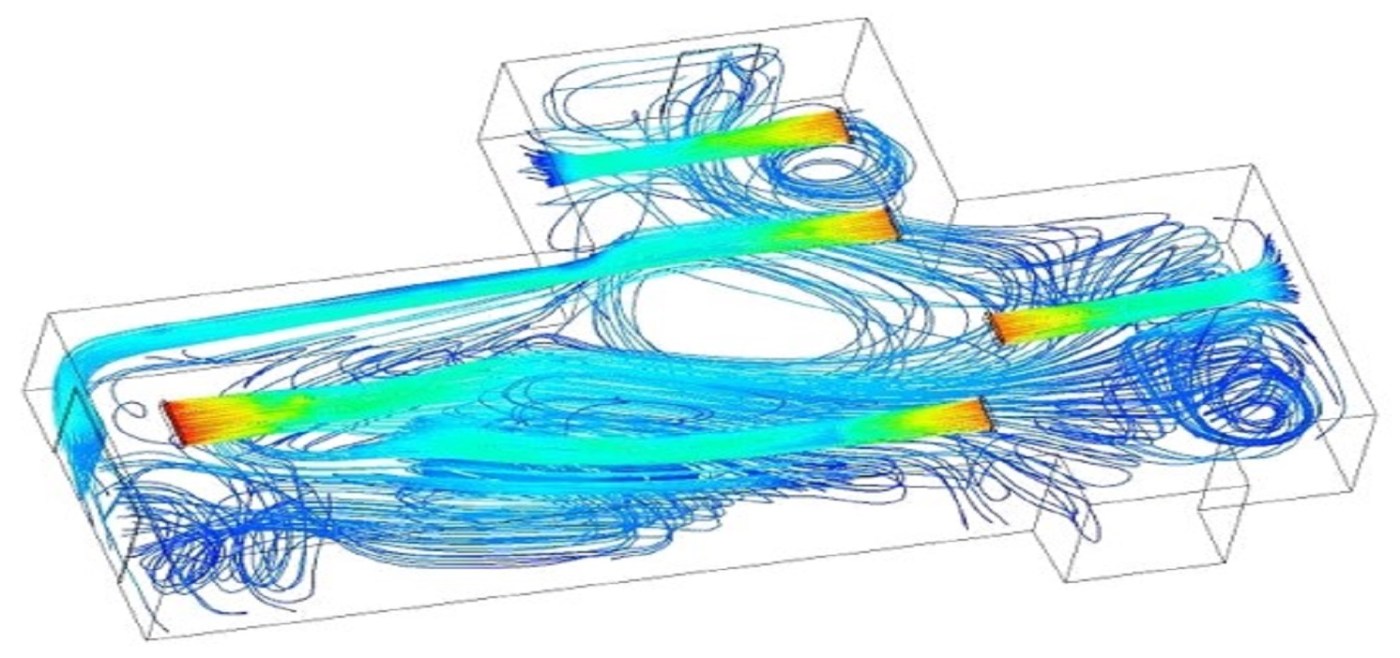
In recent years, Computational Fluid Dynamics (CFD) has been playing an increasingly extensive and intensive role in all the aspects and stages of building design, following its continuing development for over a quarter of a century. CFD solves fundamental equations of motion for individual elements of fluids at all points of the grid volume. It predicts the motion of air at all points in the flow i.e. Conservation of mass and momentum equations, using an iterative procedure until reaching convergence. The information provided by CFD can be used to analyze the impact of building on the environment, to predict smoke and fire risks in the building, to quantify indoor environment quality, and to design natural ventilation systems, etc. The below image shows how CFD connects with building design.

This article has been published in the I-SHARE magazine (Vol. XI, Issue 2) by Delhi Chapter of ISHRAE. It talks about the connection of CFD with building design at various stages such as Urban planning, early stage design, validation of building design, wind analysis, and ventilation design. The article can be accessed through Here.
There are some applications explained in the article which can be achieved with the help of CFD:
- Validating the Building Design Process
- CFD Predict Wind Environment in a Short-term before Construction
- CFD in the Design of Naturally Ventilated Buildings
- CFD in HVAC System Design
- CFD in Healthcare Facilities
- CFD in Parking Garage Ventilation
- CFD in Data Centers
Overall, CFD has the potential to provide several key opportunities to all those working in the built environment which includes better thermal comfort, reduced project lines, decreased HVAC design changes, increased values for firms, greater marketability, and the potential to win pitches. Affordable simulation software also enables impressive visualization for potential clients, reduces overall project costs, and limit timescales.

 Committed to learning
Leave a comment