
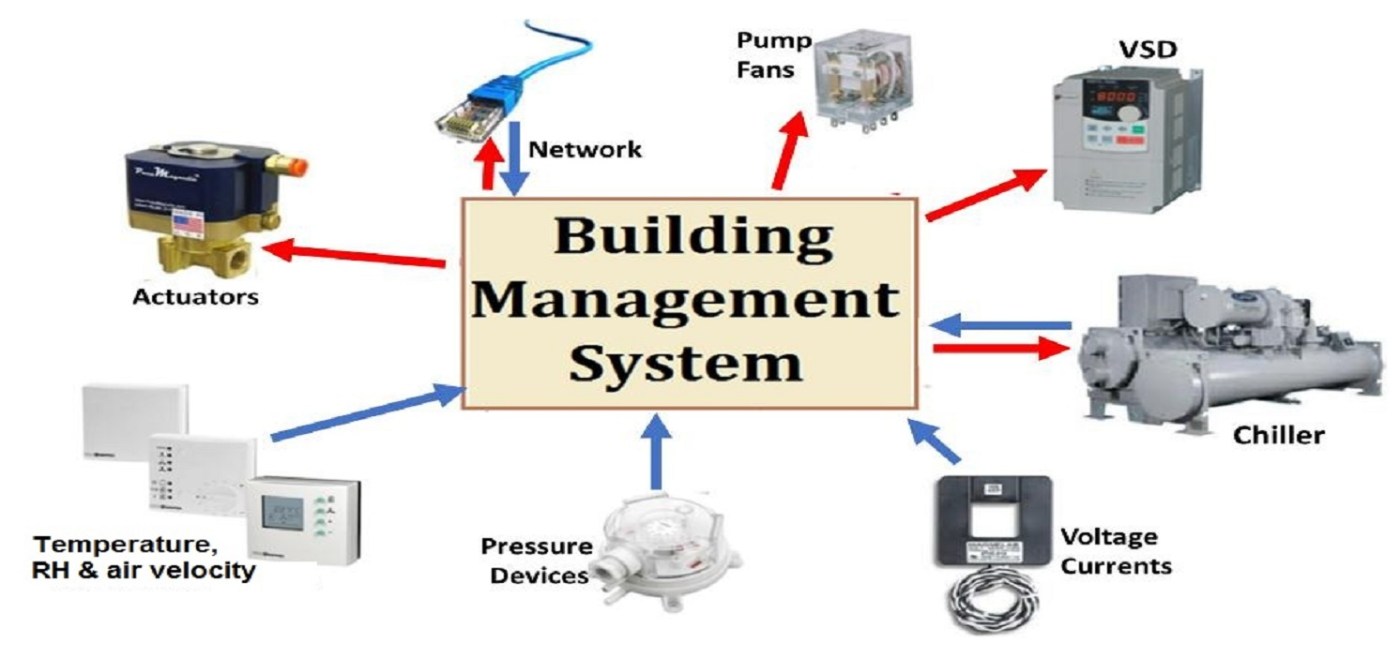
In a commercial building, 55% of energy is used by Heating, Ventilation & Air Conditioning (HVAC) systems to condition air and distribute it throughout the building (Planning Commission, Government of India, 2014). In reality, HVAC systems consume even more energy than that for some buildings, as it is estimated that approximately one-third of them are over-sized for the spaces they serve. Using smart controls to effectively manage HVAC operation is an essential function/measure for saving energy in buildings. Upon installation, smarter HVAC controls can increase energy efficiency by up to 20%.
Buildings can save energy by using automatic HVAC controls, lighting, window shading technologies, advanced building computerization, data analytics and other services. Smart buildings equipped with sensors and software’s have effective control of HVAC systems and window shading, enhance occupants’ comfort using less energy than a conventional building. Additionally, they also eliminate the need for constant human monitoring, reduce risks associated with human error, are more consistent and often provide better performance. Further, Smart buildings are able to communicate with the power grid, a feature that is becoming increasingly important for utility demand response deployment.
Types of Smart Building Controls
HVAC System:
Smart HVAC controls can limit energy consumption in unoccupied building zones, detect and diagnose faults and reduce HVAC usage, particularly during times of peak energy demand.
Complex HVAC systems can interface with Building Management System (BMS) and allow the building owners to have more control over the heating or cooling units. The building owner can monitor the system and respond to alarms generated by the system from local or remote locations. The system can be scheduled for occupancy, or the configuration can also be changed from the BMS.

Window Shading:
About one-third of commercial buildings’ HVAC energy use is due to heat gains and losses from windows. Advanced window glass and films can save energy, and passive glass technologies (such as low-E glass) are readily available. Smart window systems manage the amount of solar heat and daylight that enter the building. The system consists of passive and active window glazing and films that respond to changes in sunlight or temperature, and auto-controlled shades are scheduled to operate at specific times of the day to control light levels and solar heat gain. Smart shading technologies have the greatest energy savings potential in building retrofits.
Intelligent Demand Management and Response:
In addition to reducing HVAC operations during unoccupied periods, smart buildings can curtail HVAC use during peak demand through demand management and response.
Direct communication between smart buildings and the local utility could help manage buildings’ energy demand. Intelligent demand management and response could allow buildings to automatically respond to fluctuating electricity demand and reduce peak usage, helping building owners avoid paying increased utility prices. With electricity demand expected to increase by as much as 40% by 2030, smart buildings may very well become a key component of the current transition to a smart interconnected grid system.
However, intelligent demand response faces compatibility challenges in communications between utilities, and consumers. To address these issues, the Open Automated Demand Response (OpenADR) Alliance is attempting to “standardise, automate, and implement” automated demand response programs. Efforts like OpenADR and advances in smart building technology are helping to pave the way for widespread implementation of real-time demand response, which may facilitate the transition to smart grids in the future.
Barriers to Implementation of HVAC Control System
- Building operators and owners are slow to adopt smart HVAC technologies because of lack of awareness about the technology. New equipment is often seen as a complex system and building owners are unprepared to manage it.
- Some operators have little or no experience in analyzing large amounts of building performance data.
- Building infrastructure tends to have a long replacement cycle.
- Lack of funding and tax incentives are also a key barrier to greater investment in building automation.
- Installing a robust building control system is not cost effective in small and medium sized These building owners may consider less expensive smart controls options such as programmable thermostats to control HVAC systems, that are the most cost-effective smart controls for small and medium buildings.
Way Forward
Poised for a spurt in new building stock, smart HVAC systems will be critical for tapping energy savings in buildings in India. Policy directives incentivizing smart controls in buildings and utility DR programmes can stimulate the market for smart HVAC controls.
Initiatives from manufacturers and trade associations to create awareness can also bring about greater understanding, knowledge of the technologies and encourage usage.

 Committed to learning
Leave a comment